Wayne Jacobsen

My Disturbing Relationship with Righteousness

You can’t grow up in Christianity without thinking that righteousness is a big deal to God. The Scriptures were full of it. Our faith was structured around it. And dealing with our sin became a daily preoccupation—trying to avoid it when we could, confessing it when we failed, and promising God we would never do it again.

At best, that promise lasted a few days.

It was exhausting and confusing. Even on our best day, we knew we could never be righteous enough to earn anything from God—not in our thoughts, our deeds, or even our reactions to circumstances and people. So, we learned to minimize our failures, justify our motives, or compare ourselves to others whose sins seemed worse than ours.

Perhaps that’s why our ancestors found such comfort in the idea of imputed righteousness. If I believe in Jesus, God declares me righteous. That became justification by faith. I could be righteous in God’s eyes and finally free of guilt.

Really? If so, that’s the best deal in the universe.

But even as a child, something about that didn’t sit right with me. It felt too much like a theological mind game. Even though I still gave in to desires and thoughts that were not aligned with God’s heart, I was told I could still think of myself as righteous. At the same time, I was urged to “be holy as he is holy,” which we called sanctification. In our scheme of things, holiness was preferable, but not essential if the real goal was only to get into heaven.

Still, I pursued righteousness. After all, didn’t Jesus tell us to seek it first in Matthew 6:33? Though it didn’t seem to affect my salvation, I assumed it was the doorway to deeper engagement with Father, Son, and Spirit—or at least a way to make God more inclined to answer my prayers.

So I tried to be as holy as I could and kept careful account of my shortcomings. But my sins didn’t lose much power over me. Fear helped for a while. So did accountability sometimes, though often it only made me better at hiding what was really going on or justifying myself so my failures could look noble to others. When that doesn’t improve over time, you eventually stop trying so hard and settle for keeping your failures to the least embarrassing kinds.

That’s why I have so loved Tobie van der Westhuizen’s assertion that righteousness, as we have come to understand it today, isn’t actually in the Bible. That discovery has liberated me from the last vestiges of my preoccupation with righteousness and sin.

I know that scares people. They fear that if we don’t keep a constant eye on our sin, it will overrun us. But I’ve found the opposite to be true. The more we focus on the flesh, the more it owns us. The freer we are to focus on the Spirit, the more we experience his life. Cultivating a passion for God’s justice inside his love is what begins to free us from the flesh’s preoccupation with ourselves.

For some, this feels like taking away a security blanket. But why isn’t Jesus’s atoning death, his love, and his forgiveness enough to settle our guilt and shame? Why isn’t his presence sufficient to assure us that we are safe with him? Our confidence was never meant to rest in a theological decree, but in the experience of his presence living in us.

I’ve heard some complain that Just Love simply changes the requirement for salvation from righteousness to justice. That’s not what we’re saying at all. Salvation and acceptance by God come by his grace alone. Acting justly is not a new requirement; it is the fruit of a life lived loved. The more we engage his love, the more his justice is produced in our hearts and reflected in our actions. It is neither the origin of our salvation nor the proof of it.

Freed from our obsession with righteousness and sin, we can finally learn the way of love unimpeded by a preoccupation with the flesh. And that is a slow, beautiful transformation over time.

This is the heart and soul behind Just Love. It’s why Jesus and Paul both said that love fulfills the law. Instead of our deficiencies dragging us into condemnation and renewed efforts to try harder, they simply unmask our need for his love. The path to his justice runs through his affection, not our performance.

His love makes us safe in his presence. As that presence begins to fill us from the inside, the lies of darkness lose their grip. The need to find life outside of him slowly dissipates. And as his fullness grows in us, we begin to see the people around us differently, regarding them with the same tenderness and care we have discovered in him.

This is the relational justice Jesus invited us into, and the place where his transformation becomes real in us. Godliness doesn’t come from trying to be righteous, but in experiencing the depths of his love.

And it’s the part of the Gospel we don’t want to miss.

____________________

Tobie and I will be in Kansas City next month (July 9-12) to host the Just Love Conversations, three days of conversation, connection, and discovery around the themes of this book. There’s no cost to attend, though donations are welcome to help cover expenses. If you’re coming from out-of-town, reservations must be made by June 16 to qualify for our reduced group rate. Click on this link for all the details. We only have a few spots remaining. To reserve your place, email waynej@lifestream.org with the names of those coming. If we run out of room, we’ll start a waitlist in case others have to cancel.

My Disturbing Relationship with Righteousness Read More »

Last Chance to Join Us in Kansas City

Tobie and I are about to meet face-to-face for the first time, and we’d love for you to join us in Kansas City as we spend three days exploring the glorious implications of Just Love: How One Mistranslated Word Distorted the Gospel.

This won’t be a seminar as much as a conversation—an opportunity to sit together with the wonder of a Gospel far richer than a get-out-of-hell-free card. We lost so much when we traded God’s justness for our imagined righteousness, reducing the life of Jesus to religious schemes of behavior modification that were never meant to work. The Gospel offers something far better: freedom from guilt and shame through the work of Jesus, and a marvelous process of transformation as his love reshapes us from the inside out.

That’s what Tobie and I want to explore with you—not just as an idea to be explained, but as a reality to be discovered together. How does love-produced justice change the way we see salvation, Scripture, transformation, and God’s kingdom taking shape in the world?

If you haven’t read Just Love yet, give it a look. And if you can find your way to Kansas City, July 9–12, come join us for three days of conversation, connection, and discovery. We’ll gather at Westbrooke Church in Overland Park, Kansas. There’s no cost to attend, though donations are welcome to help cover expenses. If you’re coming from out-of-town, reservations must be made by June 16 to qualify for our reduced group rate.

Space is limited, and registration is first-come, first-served. To reserve your place, email waynej@lifestream.org with the names of those coming.

We’re calling it the Just Love Conversations, and I’d love to see you there.

You can get all the details here.

Last Chance to Join Us in Kansas City Read More »

Anticipate with Me

Over the last few years, I’ve shared on TheGodJourney, on this blog, and in It’s Time about God allowing me to taste his agony for the brokenness of his Creation. Every day, he sees the suffering and pain that permeates our world—war, starvation, abuse, oppression, exploitation, arrogance, and greed. And he doesn’t process it at the macro scale as we often think of it, but experiences it individually, in the pain and sorrow of each person.

As this age approaches it’s end point, I’ve spent some time with God in his agony. This is what it means to lament with God as he helps us recognize how the sin and injustice of his creation impacts him. You might think that would be overwhelmingly depressing. It hasn’t been. It’s been rich and has taught me the joy of sitting with God, gazing at the distress of the world, as well as rejoicing with him. It’s changed my heart, breathing more compassion into my life and letting me see ways I can help alleviate that pain in the people who cross my path.

Last week, as Sara and I were finishing our most recent trip through Isaiah in The Message, we came across these verses:

Pay close attention now:
I’m creating new heavens and a new earth.
All the earlier troubles, chaos, and pain are things of the past, to be forgotten.
Look ahead with joy.
Anticipate what I’m creating:
I’ll create Jerusalem as sheer joy, create my people as pure delight.  Isaiah 65:17-19

“Anticipate what I’m creating,” leapt off the page as if a voice were shouting it to my brain. I have feasted on these verses ever since. Through them, God has opened up a way to be with him that complements my experience with his agony.  Yes, God holds the pain of the creation inside himself, but at the same time, he is moving forward with his redemptive purpose. That is the “joy set before him” that allows him to endure the agony of its fall.

Now, I get to taste that, too, and this whole passage has come alive.

“Pay close attention now.” It takes a specific focus to see what he is doing, or else my anticipation will only reflect my idealized desires, which have so often led me astray. This is not the heavens and new earth I want, but something far grander than my natural mind would conceive by itself.

“I’m creating new heavens and a new earth.” That’s not his future plan; it’s what he is doing now. This plan is already unfolding, even though it looks to us like things might be getting worse. They are being remade, and much must be laid waste for the new to emerge.

“All the earlier troubles, chaos, and pain are things of the past, to be forgotten.” For those who suffer, those words may sound like a pipe dream. But they are our hope. The pain you hold today will one day belong to your past and won’t even be remembered when it is overrun by his glory. Maybe you can’t see it yet, but as sure as the dawn, that day is coming.

“Look ahead with joy.” When I stay focused on the pain of the present, I can be owned by it. God invites us to look down the road to see where joy might come from. The present does not define us, nor do our disappointments define who God is. The coming dawn will set all things right, and the wonder of those days will swallow up the pain of these.

“Anticipate what I’m creating.” How do we do that? It is so far beyond us. But as I sit or walk with him, I find my heart is expanding to consider what that might mean. What will the new heavens and new earth look like? I doubt streets of gold lined by mansions will do it justice. Paul said in I Corinthians 15 that what we are here is only the seed of what we’ll be in the Resurrection. If you didn’t know about apple trees, you wouldn’t see one inside an apple seed.  So, life past the resurrection will be as different for us as an apple tree is from its seed.  Doesn’t that spark your anticipation?  I don’t think anticipating with him is to figure out what it will be, but to make room for a greater glory that will make sense of everything you’ve been through here.  

“I’ll create Jerusalem as sheer joy, create my people as pure delight.”  Sheer joy and pure delight define the reality we’re headed for. There’s no need to cling to the good parts here or be fearful of the unknown, for it will delight you more than the best of times you’ve had here.

And here is the kicker to all of that. Not only is that true of the age to come, but it is also true for whatever pain or despair wars against your soul today. Read this again. This time, think about God engaging you in the midst of whatever pain or fear you find yourself in. Let him find you there and begin to walk you down a path that will put your pain in the past and lead you to his delight.

That doesn’t just await the end of the age. That’s what salvation means for you today. He wants to rescue you in ways you can’t conceive. But if you can anticipate with him, hope will win this day, and that will allow you to participate in his purpose unfolding in you. No matter how long it takes to walk you into his joy, you can anticipate what he’s doing right now.

Lord Jesus, please give us eyes to see and ears to hear.

__________________

Wayne’s latest book, written with Tobie van der Westhuizen, is called Just Love: How One Mistranslated Word Distorted the GospelIt will help you envision a world made right, and show you how to live in that reality today. Tobie is coming to Kansas City in July, and we are facilitating the Just Love Conversations there for those who want to explore this book with Tobie and me. There is still room for a few more sign-ups, and for those coming from outside the area, we have group rates at a nearby hotel. I know that can cost a bit, but the connections you make here could last a lifetime.

Anticipate with Me Read More »

The JUST LOVE Conversations

The glory of the Gospel is not just God’s love in us, as miraculous as that is, but God’s love and life through us, transforming our lives and flowing into the world.

The content of Wayne and Tobie’s new book, Just Love, invites us to rethink how the Gospel is often portrayed.

  • What if we had been focused on his love writing justice on our hearts, rather than a preoccupation with our sin and personal piety?
  • What would the church of Jesus look like if his love had always been at its center?
  • What would it change about our understanding of salvation, justification, transformation, and the nature of his kingdom taking expression in the world?
  • And, most of all, how can you experience more of his love and life in our own God Journey?

No wonder the Gospel seems so weak in our day; it has been emptied of its power. We jump through some religious hoops, claiming our salvation, without ever having touched the rich treasure of God’s love for us.

My coauthor, Tobie, and his wife are coming to Kansas City to visit family in July. We are planning a meet-up in Overland Park, July 9-12, this summer.  I would like to introduce them to you, and we want to unpack the themes of this book that will help you discover the richness of his love, as well as have a whole new way to understand the story of Scripture.

We concluded the book by saying that these realities are better explored than explained, and that’s exactly what we want to do in three transforming days in Kansas City. Tobie and I will facilitate a series of conversations to explore how God’s love and life flow into us, and then out from us to fill the earth with his glory.

You’re invited to join us for the Just Love Conversations

July 9-12 
We will gather at the Westbrooke Church
9777 Antioch Rd, Overland Park, KS 66212

Our Schedule:

      • Thursday, July 9:  7 pm – 9 am
      • Friday & Saturday, July 10-11:  9:30 am – 4:00 pm
      • Sunday, July 12:   9 am – 12 noon

Evenings will be free to explore Kansas City, rest, or connect with others for meals and fellowship.

Though we have plenty of room now, space is limited. We will register people on a first-come, first-served basis. When it fills up, we’ll start a waiting list in case of cancellations. If you’d like to register or need further information, email waynej@lifestream.org, listing the names of each person you are registering. There is no cost for the JUST LOVE Conversations, though people can donate to Lifestream Ministries to help defray the costs if they would like to help us. We will let you know when the need is covered, and send any overage to our Kenya Fund.

People from out of the area are welcome to fly or drive in to be with us. We’re trying to make arrangements for a special group rate with a hotel in Overland Park, near our meeting place. I can send you that information if you’re interested.  Unfortunately, we are competing with a FIFA World Cup game in KC that weekend. The more we have, the better rate we can get. We have arrangements now for a group rate, but you need to register at the hotel by June 17 to qualify.

So to sign up, all you need to do is email me, listing the names of the people you’re registering, and if you want more information on our host hotel.  That’s it!  

Give it some thought and come join us if God lays it on your heart. I’d be excited to see you there.

____________________

And one more thing:

We are hoping to raise $18,000 to help an orphanage in Kenya purchase a tractor. They host 380 children in an orphanage and school, and we discovered that they ran out of food last week. We immediately sent them $1700.00 to bridge the immediate need. They told me their real need is a tractor. They used to have one to help farm the land and hire it out to raise money for the children, but they had to sell it during COVID to meet new government regulations in their facility. They hope to restart the farming enterprise as a means to care for these children. We’re going to try to pool some money to help them do it.

If you want to help, please visit our Donation Page at Lifestream. Check the box for “Kenya Relief”. You can also Venmo contributions to “@LifestreamMinistries” or mail a check to Lifestream Ministries  • 107 N. Reino Rd, PMB# 411 • Newbury Park, CA 91320-3710. Or, if you prefer, we can take your donation over the phone at (805) 990-8780.

As always, every dime you send will end up in Kenya. We do not take out any money for our administrative costs.

The JUST LOVE Conversations Read More »

A JUST LOVE Meet-up in Kansas City

Would you like to spend a weekend with Tobie and me?  

My Just Love co-author, Tobie van der Westhuizen, and his wife will be visiting from South Africa this summer to see family near Kansas City. We thought it would give us an excellent opportunity to host a meet-up there for the Lifestream/God Journey audience and to further explore the themes and ramifications of Just Love.  

We are inviting anyone who would like to come to Overland Park, Kansas, outside of Kansas City, KS, for the weekend of July 9-12. Tobie and I will be there, and Kyle from The God Journey is looking to join us as well.

This is not just for local people; it’s a unique opportunity to share Tobie with all of you. Please feel free to drive or fly in to join us, and we can have a Lifestream/God Journey celebration of relationship and connection, as well as the opportunity to explore how God’s love writes God’s justice on our hearts. This will not be a series of lectures but conversations and fellowship about our engagement with love and the fruit it bears in the world. It will also leave time for casual conversations and meals with people you meet. We’re hoping this provides a similar opportunity to meet others on this journey and build friendships, as happened on the Israel tours I have hosted.

There will be no charge to attend our gatherings, though we will accept donations to help offset costs. Each person will be responsible for his or her own hotel and meals. We will recommend some nearby.

If you’d like to join us, please let me know, and I’ll send you details. Space is limited, so it will be first-come, first-served.

The Vince Coakley Radio Program 

Also, in the last week, Tobie and I were both guests on The Vince Coakley Radio Program on WBT Charlotte Newstalk. If you want to listen in, click the link and scroll down his list of shows.

For my interview, look for the second hour on Friday, May 22. My interview starts at 33:35.

For Tobie, look for the second hour on Tuesday, May 26. His interview starts at 33:35.


A JUST LOVE Meet-up in Kansas City Read More »

A Late Update on Kenya

I owe you all a heartfelt apology.

I’ve had a number of you write to me about the last appeal we made for an unexpected need in Kenya. The land they used to house and educate abandoned children was being unjustly stolen from them by the family who sold it in the first place, and a hospital that was going to auction it out from under them to satisfy an unpaid bill.

I was so preoccupied with the release of Just Love that I neglected to circle back and report on what happened in our last appeal. That’s my bad, and I’m sorry.  As always, your response was so generous, and you deserved a more timely update and acknowledgment for the fruit of your generosity. So, belatedly, and apologetically, here it is:

Again, we were blown away by the generosity you extended toward the people of Kenya. What began for us in Kenya almost twenty years ago was never a program I dreamed up or a mission strategy I wanted to manage. It began the way so many of Father’s invitations do—with relationship, with a few hearts stirred by the message of living loved, and with needs too desperate to ignore once they came into view. In this last instance, you gave enough that we were able to rescue the Forkland Care Centre and restore it to its rightful owners. In early March, they received a clear title to the Forkland Centre and will not have this trouble again. They were relieved and grateful to the “Lifestream Team,” as they call it, even though I tell them it is just brothers and sisters responding in love to their needs.

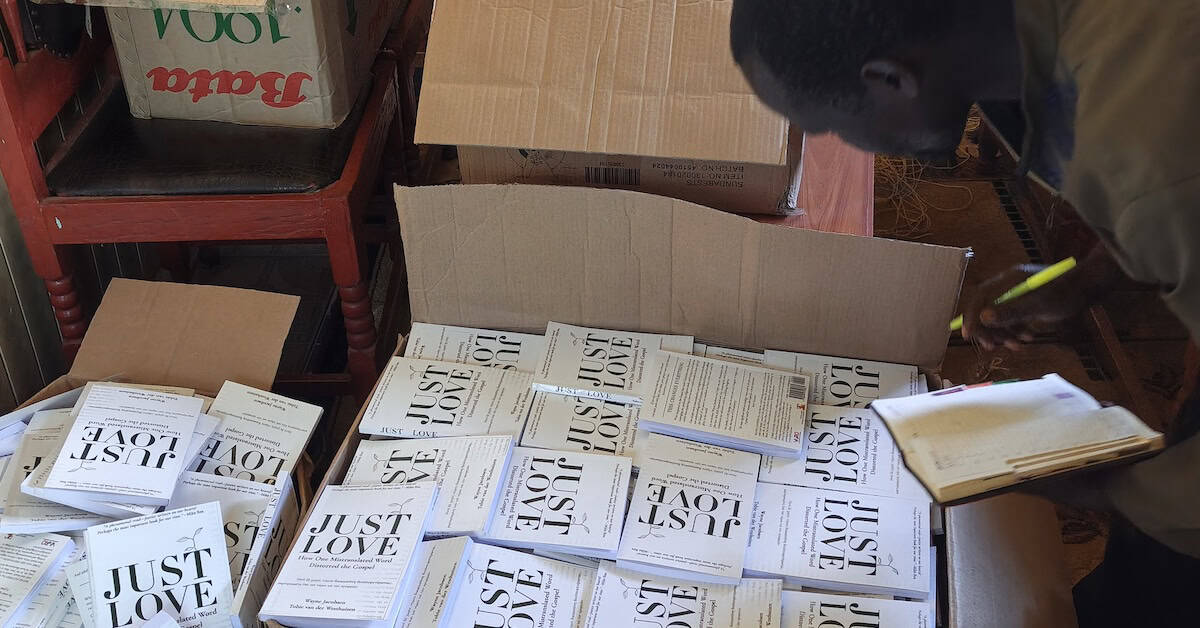
Surprisingly, you gave more than the amount they needed, so we had extra to help them print copies of He Loves Me and Just Love to share throughout the country. We also held some in their account here for future needs. A few weeks ago, we released more of those funds because the brothers there were being invited all over Africa, including Uganda, Burundi, Rwanda, and the Congo. I have also been spending time in Zoom conversations to help train them to share this message of love and how to equip people to experience this love firsthand.

So, we sent extra money, and this is their response:

Thank you so much once again for your great support. We would like to share some updates on how the support has been used. Your support became an answer to the prayers of several widows who were really struggling and, in some cases, almost sleeping outside. By the grace of God, we managed to build semi-permanent houses for them. (The partial construction is pictured above.) One house with three rooms, which accommodates three widows, and another four-roomed house accommodates five widows.

After the heavy floods of 2025, we also tried to help them settle again. In addition, we bought food for them, and they are very happy and continually thanking God for answering their prayers.

Another prayer that has been answered concerns those who are spiritually hungry and seeking the truth of God. So far, we have managed to reach over 130 groups in different regions across Rift Valley and Western Kenya. Each group has around 25–30 people, and we further divide them into smaller groups for prayer, sharing the message, and discussions.

What we have discovered is that people are very happy when they are given time to interact, ask questions, and share together. There are still many regions inviting us, including Mt. Elgon, where many people are still suffering from trauma, and also Pokot, where they have called us to share the same message.

We have also printed a few copies of the book Just Love, and soon we are planning to schedule a Zoom meeting with you to discuss further how we have understood and used the teachings. Thank you so much for equipping and supporting us in spreading the message of our Lord and Savior Jesus Christ.

Thank you also for allowing your book to be printed and used by us as we move from village to village and region to region, sharing the life of God. There is a great hunger and thirst for God here in Kenya and across East Africa. We truly thank God for the provision and the privilege He has given us to be used as tools to spread the message of His love.

The Bible tells us in John 3:16 that God loved the world so much that He gave His only Son. Through Jesus Christ, God showed His love openly to the whole world  by saving, healing, forgiving, and restoring humanity. As believers, we are also called to demonstrate that same love to others through compassion, generosity, prayer, encouragement, and sharing the Gospel. When we serve the needy, stand with the brokenhearted, and preach Christ, the world can see the love of God through us.

Please continue praying for us, that we may train and coach small groups of about 20 people who can help us continue this work effectively.

We will keep this fund active, if any of you want to continue to give either for immediate needs or to help them respond to the invitations to share God’s love throughout East Africa. If you have anything to help us here, please visit our Donation Page at Lifestream. Check the box for “Kenya Relief”. You can also Venmo contributions to “@LifestreamMinistries” or mail a check to Lifestream Ministries  • 107 N. Reino Rd, PMB# 411 • Newbury Park, CA 91320-3710. Or, if you prefer, we can take your donation over the phone at (805) 990-8780.

As always, every dime you send will end up in Kenya. We do not take out any money for our administrative costs.

For those who want a summary of our work there, I asked ChatGPT to cull through my past Kenya blogs and write a summary of what your generosity has accomplished there. (No, I didn’t have time to do this on my own, but it’s a really good summary.)

In the aftermath of Kenya’s post-election violence in 2008, we were drawn into the lives of children and widows who had lost almost everything. What started as emergency help became the Living Loved Care Centre, a place where orphaned children could be fed, sheltered, educated, and surrounded by people who would show them they were not forgotten. Many of those children have since grown up, completed school, gone on to college or university, found work, and begun to stand on their own. That has always been the hope—not to create dependency, but to help love open a door where there had only been loss.

As the years unfolded, the needs broadened. We helped provide food, clothing, bedding, school fees, medical care, and staff support. We also helped launch projects that could sustain the work from within Kenya itself—a petrol station, a grain enterprise, truck transportation, and other income-producing efforts to help feed children, pay staff, maintain the centre, and educate those who had no other way forward.

Then came North Pokot. A drought had devastated a nomadic people, leaving families without food, clean water, or a viable future. Through the generosity of so many of you, relief was sent, wells were dug, irrigation began, and agricultural projects were started so communities could feed themselves again. It was not merely about keeping people alive for another week, but helping them discover a way forward. In that process, many also encountered the Gospel of God’s love, not as a sermon first, but as water in the desert and food for their children.

Later, our hearts were drawn to Forkland School, where contaminated water threatened the children and the surrounding community. We helped drill a well that not only provided clean water but eventually became the foundation for Springs Garden Mineral Water, a bottled-water enterprise intended to sustain the school, bless the surrounding community, and create overflow for others in need. When government requirements later forced the school to expand its land, we were able to help with that as well.

Through the years, there have also been repairs, rescues, and setbacks—flood damage at the orphanage, repairs to the Living Loved Centre, restoration of the water bottling equipment, support for the grain enterprise and petrol station, and emergency food during drought. Even recently, our friends in Kenya wrote with gratitude for help in North Pokot, the rehabilitation centre, the water company, the grain enterprise, the petrol station, and repairs to the centre.

Looking back, I am still amazed that a small audience like ours could be part of so much. Millions of dollars have flowed through Lifestream, and every dollar designated for Kenya has gone there without administrative fees. But the deeper story is not money. It is love taking shape in wells, classrooms, meals, medicine, businesses, farms, and hope—so people who once wondered if God even saw them could taste, in tangible ways, that they are deeply loved.

Thank you to everyone who has given to these dear brothers and sisters and those who have held them before God in prayer. They are immensely grateful, and so are Sara and I.

A Late Update on Kenya Read More »

ChatGPT and The God Journey

They say that mentioning AI in a graduation speech this year will get you instantly booed by the students, unless you’re disparaging it. That’s true of the young people I talk to. They don’t see AI as a net positive for their future, but a real threat to the kind of life they hoped to live. And they are not wrong. Pandora’s box has been opened, and humankind’s penchant for money and power, as well as the motives of bad actors on this stage, will undoubtedly twist this technology in ways we can’t conceive.

So, I have a very conflicted relationship with AI. I have a wary eye on what it does and what it might become, using it rarely and cautiously, hoping against hope that wiser heads will prevail in putting restraints on its usage. In the meantime, I find it helpful for research since it can process large amounts of data and assess its meaning. Last week, I shared how it synthesized my writing trajectory by looking at the themes of the books I’ve published. That produced a helpful tool for people who want to understand my books in context or even try to figure out which ones they want to read.

So, I asked ChatGPT to analyze the 22-year history of The God Journey and map out the trajectory of its content. I wanted to know what that would look like taken as a whole. Keep in mind that we never had a strategy over those years. We simply did one episode at a time, usually stimulated by what I, my co-hosts, or guests were exploring in their own spiritual journeys.

The results astounded me. I love the larger story we have told without even trying. When I shared them with my Kyle, my current co-host, he was amazed as well. While neither of us is settled about how AI is being utilized in our world, we found this summary glorious. We talk about it on today’s podcast, but I include the full text here for those who want to read it.

So, here is a synthesis of 22-years of The God Journey, all 1034 episodes (at the time), in 520 words:

The God Journey has been a long conversation about what happens when faith migrates from obligation into love.

Across its twenty-two years, the podcast’s theological center has remained remarkably consistent: God is not trying to manage people through fear, performance, hierarchy, or institutional control, but to invite them into a relationship of trust, affection, freedom, and transformation. What has changed is the depth and range of that conversation.

In its earliest years, The God Journey gave voice to people who were beginning to question religious systems that had promised life but often produced exhaustion, guilt, conformity, or disillusionment. The podcast became a safe place for those who were not abandoning Jesus but were no longer able to equate following him with maintaining the structures, expectations, and vocabulary of organized Christianity. Its early theological energy was largely liberating: helping people recognize the difference between relationship and religion, between life in Christ and life under obligation.

Over time, however, that critique became less reactive and more constructive. The podcast did not remain focused simply on what people were leaving behind. Its emphasis increasingly shifted toward what they were being invited into: learning to live loved. That phrase became more than a slogan; it became the organizing vision for a life rooted in the Father’s affection rather than in human striving. The conversation matured from release into formation—from escaping religious performance to discovering how trust grows, how freedom reshapes daily choices, and how love becomes the ground of identity.

A further maturation came as the podcast engaged more honestly with suffering. The themes of grace and freedom were tested against trauma, abuse, grief, betrayal, and relational breakdown. In that movement, the theology became more embodied. Love was no longer discussed only as a comforting idea or a corrective to bad religion, but as the presence of God in the darkest places, the slow work of healing, and the possibility of repair when people and institutions have failed.

As the years unfolded, the podcast also widened its concern beyond personal spirituality. Living loved began to touch questions of power, race, politics, justice, leadership, technology, loneliness, and cultural fragmentation. The podcast’s theological trajectory moved toward an understanding of love not merely as private consolation, but as a way of seeing and engaging the world. Authority, for instance, is increasingly framed not as position or title, but as the fruit of union with God and service to others. Justice is explored less as punishment and more as the restoration of what has been broken.

Seen as a whole, The God Journey has matured from a refuge for spiritually disillusioned people into a broad, love-centered theological conversation about formation, healing, and public witness. Its enduring question has been: What does life look like when God’s love is trusted more than religious obligation, human power, or fear? The answer has grown richer over time. It now includes freedom from performance, healing from trauma, deeper relational honesty, suspicion of coercive power, and a more generous vision of justice. The trajectory is not a departure from its beginnings, but an expansion of them. What began as an invitation to leave religious obligation has become an invitation to inhabit love as the deepest reality in all of life.

The “invitation to inhabit love” is as good a line as I’ve heard recently, especially when we are talking about the love that is the very nature of the Father who created us. Letting ourselves be swept up in that river, plunging into its depths, and letting it flow through us to others offers the greatest joy. Sara and I are grateful for how that love has shaped us and how we have been able to share it with others all over the world, both in loving and being loved. Those we have met in this space and the friendships that have formed from it are the riches we most treasure.

ChatGPT and The God Journey Read More »

My Literary Journey According to AI

Before AI destroys the world we live in, I thought I’d play with it a bit. I asked ChatGPT to research the books I’ve written and the comments people have left about them on Amazon and Goodreads. I then asked for an objective analysis of my literary journey, just to see what it would come up with.

Honestly, I was quite surprised at what came back and grateful that even an AI bot can recognize how my passion for God has progressed over the last thirty years. What an amazing synopsis of not only my literary history, but my life’s journey as well. I love how Jesus has been shaping my life over the forty years I’ve had the joy of sharing my thoughts in book form.

I’m sharing it here because people often ask me which book might be most helpful in their journey. I always encourage people to start with He Loves Me, because those are the lessons that changed my life. However, I don’t think there’s a generic answer to that question; it would depend on the questions they are asking and the circumstances that confront them. Here’s a guide to help guide people into what book might be first, or next, for them.

Wayne Jacobsen’s literary journey unfolds as a coherent and progressive exploration of one central reality: the nature of God’s love and what it means for human beings to live within it. Across his body of work, there is a clear development—from early questions about institutional Christianity, to a deepening revelation of God’s affection, to a reframing of the gospel itself, and finally to the application of that vision in everyday life and a fractured culture.

With The Naked Church (1987), Jacobsen begins stripping away the institutional layers and religious assumptions that often obscure the simplicity of life in Christ and sets the trajectory for everything that follows. Rather than offering a polished alternative system, the book calls readers back to an unadorned, relational faith—one rooted not in structures or expectations, but in a living connection with God and others. Written ahead of a broader cultural shift, this early work anticipates questions many would not begin asking for another decade, and introduces a lifelong theme: that the life of God is often hidden beneath the very systems meant to contain it.

That foundational questioning leads naturally into Jacobsen’s most formative theological work, He Loves Me: Learning to Live in the Father’s Affection (2000). Here, he addresses the underlying issue beneath institutional distortion—the perception of God Himself. The problem, he suggests, is not only the structures people inhabit, but the way they have come to see God. Challenging the assumption that God relates to people through disappointment or conditional approval, Jacobsen presents a Father whose love is constant, initiating, and transformative. This shift—from striving to earn God’s favor to living in the security of His affection—becomes the interpretive lens for all his later writing.

This same exploration finds a more experiential expression in So You Don’t Want to Go to Church Anymore (2006, with Dave Coleman). Through narrative, Jacobsen gives voice to the growing number of people disillusioned with organized religion while pointing toward a vibrant, relational life with God beyond it. The use of story allows readers not only to understand these ideas but to experience them, marking an important development in his communication.

A dramatic widening of both audience and influence comes through The Shack (2007, with William P. Young and Brad Cummings), where these themes are carried into a deeply personal narrative. Through a deeply personal story of loss and encounter, the novel explores themes of suffering, forgiveness, and the nature of God’s love. It serves as a narrative counterpart to his theological work, inviting readers into an experiential understanding of God’s character. Its global impact brought his core themes into a much broader cultural conversation.

Turning more directly to the person at the center of his faith, Jacobsen deepens his focus on the person of Jesus in A Man Like No Other (2007 with Murry Whiteman and Brad Cummings). Here, he invites readers to encounter Jesus not as an abstract theological figure, but as a living presence whose humanity and divinity redefine what it means to know God. In doing so, he presents Jesus as the clearest window into the nature of the Father and the fullest expression of a life lived in union with Him. This work grounds his broader themes in the person and character of Christ, reinforcing that relationship—not doctrine—is the heart of faith.

Complementing these major works are more pastoral and practical writings. Authentic Relationships (2003, with Clay Jacobsen) explores how genuine connection grows out of honesty, trust, and mutual care rather than obligation. In Season: Embracing the Father’s Process of Fruitfulness (2009) helps readers understand how God works through the seasons of life to cultivate lasting growth. Live Loved FreeFull (2011) distills his central message into a concise invitation to rest in God’s affection and live from it.

From that relational foundation, Jacobsen returns to the question of community in Finding Church: What If There Really Is Something More? (2014). Moving beyond critique, this book offers a constructive vision of the Church as a relational reality rather than an institutional obligation. It invites readers to rediscover community as something that emerges organically from shared life in Jesus, rather than something sustained by programs or structures.

The implications of that vision move further into daily life with Beyond Sundays (2018), where faith is no longer confined to gatherings. Rather than simply questioning traditional church structures, he invites readers to consider what it looks like to live a vibrant spiritual life that is not confined to weekly gatherings. Here, the focus shifts from critique to integration—what it means for life with God to permeate the ordinary rhythms of daily living. The book reinforces a central theme: that the life of God is meant to permeate everyday living, not be contained within religious routines.

As his focus broadens beyond personal and communal life, A Language of Healing for a Polarized Nation (2020, with Arnita Willis Taylor and Bob Prater) extends these themes into the cultural landscape. If God’s love restores individuals and reshapes relationships, it must also address division and conflict in the wider world. This book explores how people can engage across deep differences with humility, compassion, and a commitment to healing, demonstrating that love is not merely a private experience but a public force.

Amid growing uncertainty about the future, It’s Time: Letters to the Bride of Christ at the End of the Age (2025), turns the conversation toward how believers live with hope and attentiveness in the present. Here Jacobsen extends his lifelong emphasis on relational faith into the question of how believers live in a time of uncertainty and growing global tension. Rather than turning to speculation or fear-based interpretations of the future, he invites readers into a deeper formation of heart—one marked by trust, attentiveness, and a love that endures regardless of circumstance. Written as a series of reflective letters, the book functions less as a theological treatise and more as a pastoral summons, calling the Church to readiness not through urgency or anxiety, but through a deepening participation in the life of God. In the context of his broader journey, It’s Time serves as a bridge between the application of God’s love in a fractured world and the theological clarity that follows, helping readers anchor their hope not in outcomes, but in the character and purposes of God.

Bringing decades of reflection into sharper theological focus, Just Love: How One Mistranslated Word Distorted the Gospel (2026 with Tobie van der Westhuizen), names more explicitly what has long been implicit in Jacobsen’s writing. What had previously been explored relationally and experientially is here named more explicitly at the level of language and meaning. He revisits the concept of righteousness and reframes it through its biblical roots in justice—God’s work of setting things right in relationships. Rather than introducing a new direction, this book names with greater clarity what has been implicit throughout his earlier writing: that the gospel is not about meeting a standard, but about participating in God’s restorative love. In this sense, Just Love serves as both a culmination and a clarification of the journey that began decades earlier.

Taken together, Wayne Jacobsen’s body of work reveals a clear and unified progression. He begins by questioning institutional expressions of faith, then reframes the character of God as deeply loving and trustworthy. From there, he explores how that vision reshapes community, centers on the person of Jesus, and ultimately redefines the gospel itself as God’s work of restoration. Finally, he extends those insights outward, applying them to everyday living and the healing of relationships and societies.

At every stage, one theme remains central: the Christian life is not about striving to become acceptable to God, but about awakening to a love that has always been present—and learning to inhabit that reality.

I am grateful beyond words for this most unexpected journey from the egotistical aspirations of a 22-year-old ministry student to a transformative journey that overturned my expectations and allowed me to discover a God so much more wonderful than what I heard of him growing up. He has answered my deepest questions, brought me into the joy of relational community with others, and taught me to trust him through anything.

If these books have encouraged you to find God more present in your experience, then I am grateful you read them.

My Literary Journey According to AI Read More »

Navigating Difficult Times

Sara and I are going into stealth mode this week as we celebrate our 51st anniversary. Each one is more precious than the last, as we celebrate God’s goodness in all that he has done in us. As we go, I want to leave you with something that touched our lives last week. 

This year, Sara and I are doing a daily reading from my devotional book, Live Loved Free Full. It’s weird to be encouraged by my own words, but we have enjoyed the daily nudges to lean into a life of love instead of being swept away by the challenges of life in this age. (And as a side note, I’ve also been amazed at how many times in this little book I link love and justice. It makes me smile to see the seeds planted long ago for what would become Just Love.)

As we read the May 3rd entry this year, I was particularly touched by the words and a desire to share this entry on my blog. The italicized sentences are the ones I thought those of you going through difficult or perplexing times might benefit from the reminder.

May 3: Keeping Reality Straight

Dreams are an intense experience for me. I’ve awoken from many a dream in sorrow over someone’s death or in anxiety over a challenging circumstance. So real do they seem that the emotions often linger long after realizing it was only a dream.

However, what we see and feel when we’re awake is not the real world either, at least not all of it. We so easily mistake the dictates of this world and our interpretation of them as reality itself. It isn’t. The real world is in Father’s heart, where what’s eternal has more weight than the things we see and touch here. He has invited us to be at home in him in everything we do and in every circumstance that confronts us.

We have to live in this world, but he invites us to see beyond it.

Behind every circumstance is a loving Father at work.

Through every disappointment is a greater truth yet to be explored.

Beyond every confusion is wisdom waiting to be discovered.

Instead of interpreting who God is through the things we see, we will be far wiser to interpret every event through that which God values. When we lose sight of that, the distractions and routines of living in this world will define our reality and diminish our awareness of him.

As this world is far more real than our dreams, so is God’s reality far more significant than what we experience in this one. I’m sure you’ve touched it in moments of prayer and reflection where fears vanished, and you could see possibilities beyond your strength and wisdom.

That’s the real world. Do your best not to awaken from that one as you go about your life in this one.

The things we see now are here today, gone tomorrow.
But the things we can’t see now will last forever.

2 CORINTHIANS 4:18 (MSG)


Do you see those bold sentences above? That reality is why I’m still standing after the last five years. How Jesus rescues us from “this present evil age” is by walking us through the challenges life throws at us. He is not the cause of every circumstance, but he is behind them, offering us a way through. He is not the source of our disappointments, but they can reveal the lies we believe and the joy he offers us. He does not want us to be consumed by confusion, but to seek the greater wisdom that will allow us to make our next steps with confidence.

I was with a friend yesterday who is traversing some painful circumstances. As we talked about them, I asked how God was being revealed in them. To my surprise, he started laughing. He shook his head, “I haven’t asked him.” I paused, and then he spoke again. “Why haven’t I asked him?”

It’s easy for any of us to put our heads down and keep plowing through the struggles that face us. We may even ask him to help us, without holding our concerns and worries in his presence, until his insight and strength give us his way through them. He not only wants to bring us freedom in our circumstances, but wholeness in his heart while he does so.

Navigating Difficult Times Read More »

What if we're missing the Gospel Jesus preached?

What We Lost When the Gospel Was Severed from Justice

It may not have been intentional, but it is a great loss, nonetheless.

The Bible is full of God’s passion for justice, not in the sense of vengeance for bad deeds, but as a way for his creation to live together in compassion, fairness, and mercy—treating others as we would want to be treated. And that’s with half the verses that refer to justice left out of the English Scriptures because translators switched the word justice to righteousness. Making matters worse, over the last 500 years, the meaning of righteousness shifted away from living justly to a status conferred on us if we believe in Jesus.

In my new book with Tobie van der Westhuizen, Just Love, we show how that simple change distorted the Gospel that invited us into a process of transformation that only grace could achieve by the power of love. We lost our ability to grow in that love as we became preoccupied with our personal righteousness, whether we believed enough to be declared righteous or we acted well enough to qualify for grace. What a mess we made!

And in doing so, we lost so much.

For instance, how do you read I John 1:9? Most English translations read something like, “If we confess our sins, he is faithful and just and will forgive us our sins and purify us from all unrighteousness.” How would it differ if the verse read, “and purify us from all injustice?”  That’s how John wrote it in the original. The same word translated as “just” to describe God early in the verse is the same root for the word he wants to cleanse us from—injustice.

Do you notice the shift in meaning here? I used to read that verse as if my confession to God allowed him to cleanse my unrighteousness so that he saw me as pure. It conferred a status. But if the word is injustice, that cannot be a matter of status, only the fruit of transformation. My confession to a forgiving God opens the door for him to remove injustice from my heart, so that I am not just forgiven, but free. I love that.

By changing the word to righteousness, we lost our focus on the powerful work of the Gospel to reshape the human heart.

But that’s not the only thing we lost when we severed justice from the work of Christ in us. Here are four others:

  1. We lost the Gospel’s connection to its Old Covenant roots— God’s passion for justice. The Law revealed what it means to honor God and treat others around us justly. When we no longer allow love to transform our hearts, we lose sight of its power. Jesus didn’t come to abolish the law, but to fulfill it. How? By reconnecting us with his love that not only unites us with him but also raises our awareness of others to the awareness we have of ourselves. When that happens, we will naturally treat them the way we’d want them to treat us. Fairness, kindness, and mercy become the fruit of his work in us. The Law expressed God’s desires in ways human performance could never fulfill. But Jesus’s love in us can, and by being so preoccupied with sin management and our failures at it, we’ve missed the power of belovedness that will not only transform our lives, but the world around us.
  1. We lost what salvation meant in this life. We relegated salvation to assure our eternal destiny, guaranteeing us a place in heaven, rather than the work of God to deliver us from the tyranny of our narcissistic flesh. So, even though many believe they are going to heaven, they have no connection to what it means to embrace eternal life while still living on earth.
  1. We lost the wonder of affection-sourced transformation. When salvation became about eternity, transformation became optional. All we needed to do was believe in him and follow enough rituals to maintain our salvation. That robbed people of engaging God by the power of the Spirit, so they could actually become just from the inside. So much of Christian experience is not engaging his love, but using our efforts to try to live better for him. When those efforts prove fruitless, even when we’re able to act better than people around us, we doubt whether we’re really saved. Only the transformation love provides can change the way we think and live in the world—with greater freedom and compassion for people around us, whether they believe like we do or not. The just life is the fruit of a healed life.
  1. We lost the relational community that only love can produce. When the people God is transforming with love connect with others who are on a similar path, community flourishes. It doesn’t need to be managed by religious systems that seek to maintain order, because they live honoring and preferring each other, bearing with each other in weakness, forgiving each other’s offenses, and serving each other with joy. This is how the kingdom becomes visible. No human relationships are more powerful or enjoyable than those that grow out of his love and justice. There is no competition or need to fight for power. They are safe, supportive, and a joy to be part of.
  1. We lost our mutual identity with the poor, the marginalized, and the wounded, and our efforts on their behalf became an obligation, not a natural overflow of his love at work in us. Actions that truly help others don’t rise out of compulsion, but heartfelt affection and compassion.

The early church would have found it strange to separate ‘being saved’ from ‘being made just.’ Salvation was not merely a change in legal status before God; it was the beginning of God’s justice being written into human beings, communities, and ultimately the creation itself.

When we put God’s justice back into our understanding of the Gospel, not as a fearful standard lorded over us with threats of punishment, but as the outworking of experiencing the love of a gracious Father, it becomes so much more powerful. By setting us free from our own efforts to please God, it allows his love to flow into us. There, it will rewire our inner life away from fear and the need to perform, and then it will flow out to let God’s life fill the world.

Who would want to miss that?

_____________

Just Love is available in paperback from Lifestream for $13.99 each. But, if you want to order five or more, you can purchase them for $10.00 each.


What We Lost When the Gospel Was Severed from Justice Read More »